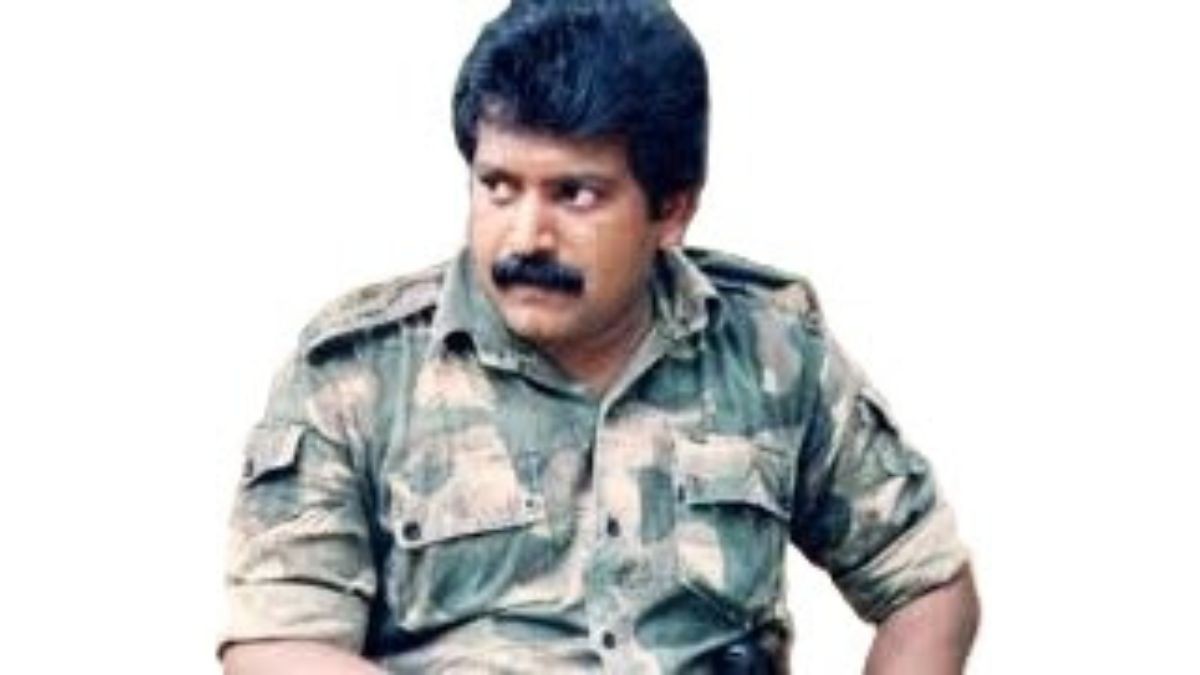
A convention of Tamil Diaspora activists, is scheduled for 02 August (2025) to publicly declare Velupillai Prabhakaran (VP) was in fact assassinated on 19 May, 2009 with the conclusion of the North-East civil war, says a long write-up posted on 24 July in the website “The Federal”. It says many groups of Tamil Diaspora activists from different countries will be participating in this historic convention ( https://thefederal.com/the-federal-special/sri-lankan-diaspora-prabhakaran-dead-basel-event-198395 )
With the elimination of Prabhakaran along with top LTTE leaders who were with him, the 25 year long armed civil conflict was announced as finally concluded, by President Mahinda Rajapaksa addressing parliament, on 19 May, 2009. His proud announcement on 19 May, brought jubilant Sinhala-Buddhists to the streets, who cooked milk rice on the streets, lit fire-crackers and danced through the day. Yet the Tamil Diaspora and the Tamil political leadership in Tamil Nadu, refused to accept Prabhakaran was eliminated. They believed, capturing and eliminating Prabhakaran was no easy task, as said. They had their own interpretations and narratives that said, Prabhakaran gave the slip to SL armed forces and fled to a foreign country and would emerge when necessary, to lead the next “Eelam War”.
The exceptionally descriptive story in the “The Federal” was authored by M.R. Narayan Swami a political analyst, writer and journalist in New Delhi, who had previously authored 04 books on the Sri Lankan civil conflict. His opening line was, “Sri Lankan Tamils appear to be ready to finally lay some of their ghosts to rest”. He then wrote, “After 15 years of the baseless claim, during which some ex-LTTE fighters illegally raised vast sums of money in the West from gullible fellow Tamils, dominant sections of the diaspora have decided to accept the bitter truth”. He also wrote, the convention would decide to have a statue of VP that would be shipped to London, to be erected in a private estate, for public view.
Elimination of VP and the LTTE defeat in the military conflict, came as an aftermath of the long survived ceasefire signed in February 2002. I was then a frequent visitor to Jaffna and Kilinochchi, involved in “track-02” work in facilitating initiatives to iron out rough edges and in confidence building necessary for peace negotiations. I thus met with very senior, top level LTTE leaders in Kilinochchi. Some of them, I came to know were initial cadre trained in guerrilla warfare in Lebanon. Some were trained by the Indian army, in Indian military training academies.
They were the frontline leaders who planned major operations, led from the front, took split second decisions in the battle field. It was their stealth and the risk they took that led to the capture of military camps in Vavunathivu, Thandikulam-Omanthai, Mankulam, Kilinochchi and Elephant pass, giving them total control of the A-9 Kandy road from Omanthai to Muhamalai and also completely wiped out the Mullaitivu military camp.
During the next two to three years, the cease fire changed their lifestyle with new responsibilities. Ordinary people trying to establish themselves in near normal social stability, demanded a civil State for day to day work. Senior LTTE cadres therefore had to be moved to responsible, decision making positions in structuring their own “State”. That was how the LTTE local administrative offices came to be. Law and order in their areas required a police department and their own legal system.
All this was happening with senior, battle hardened, experienced leaders settling down to comfortable, routine office type work with the cease fire providing peace and freedom sans military threats to LTTE held areas. A decade ago in December 2015 I wrote in my blog an article titled “A case for young blood”. There I wrote, ” In fact that was also a part reason for the defeat of the LTTE under the Rajapaksa regime in 2009. The Tiger leadership could not complete its committed objective of establishing a separate Tamil ‘Eelam’ they embarked upon in their ‘twenties’ after they aged to ’40s’. When they met the Rajapaksa regime’s brutal onslaught, the battle hardened leadership from Prabhakaran to Pottu Amman, Thamil Selvam, Pulidevan, Soosai, Theepan, Bhanu, Poo annan and most others of their calibre were beyond the age of fighting cadres. They had settled into administrative and out of battle responsibilities since the 2002 cease fire agreement and were comfortable ‘supervisors’ of the ‘Eelam’ struggle. The war waged by the Sri Lankan State was infused with young Sinhala rural blood recruited for battle, trained for battle and sent out to win the war at any cost.” (for extra reading – https://kusalperera.blogspot.com/2015/12/a-case-for-young-blood.html ) In fact, when the cease fire was signed in 2002 February, VP was 48 plus, in age.
The new blood the LTTE brought to their fighting ranks were not as motivated as the Sinhala-Buddhist village youth, who joined State forces. These young Tamil boys and girls were given a local training in LTTE training centres in Vanni and could not match the training of their elder fighters.With the East living a normal civil life after President Wijetunge, who cleaned up East in 1993 and held LG elections as well, recruitment for LTTE had reduced considerably.
Once a fighting cadre and then the LTTE political leader for East, Karikalan told me, it was mainly recruits from East who fought to establish LTTE control over the A-9 Kandy road from Omanthai to Muhamalai. LTTE lost those youthful resources during and after the ceasefire.
In summary, the LTTE considered the world’s most ruthless and innovative guerrilla outfit, was gradually evolving into a moderate fighting outfit, with their capacities and leadership resources focused more on establishing an alternate administrative machinery to the Sri Lankan State, during a ceasefire that was only temporary.
Great intellects of the Tamil Diaspora
Meanwhile, the 2005 November presidential election was also dragging closer on the calendar. I had to participate in a workshop that assessed post-Tsunami reconstruction and rehabilitation in Cologne, Germany, a week before the presidential election. There I met a dozen or so Tamil gentlemen, who were all well established professionals, academics, technicians, managers, children of hard working men and women who left Sri Lanka after the ’83 July Tamil pogrom. They were all in a mighty hurry to know what the outcome of the November 17 presidential election would be.
Before I left Colombo, the LTTE had announced a presidential election boycott. I therefore said, a definite forecast on the election results was not possible. Few immediately burst out asking, “Does that mean Ranil can win?” There is an issue I said, as to how the Muslim vote in the East would behave. If they do not fall in line with the LTTE boycott call, Ranil may have a chance, I added. “Anyway, around 25 to 30 percent of the Tamil vote in North-East may vote” I said.
That had a strong collective protest. “That cunning jackal? He would not be allowed to become president” they all echoed. They said it was the Tamil Diaspora that decided the boycott and asked Prabhakaran to officially announce it, as Ranil cannot win with only the Sinhala votes. “He cannot win without us voting him.” they said “…and we won’t”. I thus asked them what they as Tamils would gain by having Mahinda Rajapaksa as president. Their explanation was beyond what I would call “insane” and left me wondering, “what type of political intellectuals are they?”.
Their argument in a gist is this. If Ranil Wickramasinghe becomes president, Tamils would have to sit for peace negotiations that would get dragged and Ranil will bring international pressure on them to agree to his terms and conditions. “Ranil will get Western powers to back him” they said, accepting Ranil has that capacity. Therefore they do not want Ranil as President.
About Rajapaksa as president, their explanation was wholly out of this world. Mahinda Rajapaksa’s Sinhala-Buddhist politics would leave no space for negotiations. That was partly true. Thus the ceasefire would fall apart in no time and lead to an armed conflict yet again. With that the Tamil Diaspora could campaign for a “UN Peacekeeping Force” to provide security to North-East. “Rajapaksa will have to then leave North-East taking his Sinhala army to the South with him”, one of them said, with much pride.
My first take on it as one who refused to believe the claim Basil R and Tiran Alles doing a multi million rupee deal with VP to boycott elections, was pure gossip. If VP wanted such a deal, it wouldn’t have been this unknown Emil Kanthan, who would have come as the middle man. During the first days Kanthan was in Colombo, he met me too, and I wasn’t impressed by his kite flying talk. For an extremely serious political deal with millions of rupees, VP had far more trustworthy, few top level LTTE leaders coming to Colombo during ceasefire, who could have played the middleman’s role. Also, I did not believe VP would sell his hard earned, much sacrificed reputation and credibility for such personal financial gains. As these Tamil Diaspora gentlemen stressed, election boycott was a Diaspora decision, the LTTE leadership carried through. But there is always the possibility of wheeler dealer Kanthans making a quick buck on information they become privy to, before they are officially announced.
Next is politics of that decision. It simply proves, the Tamil Diaspora had no clue of the impact the 9/11 Al Qaeda attack on New York WTC twin towers and on the Pentagon in Arlington County, Virginia had on global politics. With around 3,000 deaths and the much touted impenetrable US national security left with gaping holes, President George W Bush Jnr. declared terrorism a “global threat”. Any non-State group or organisation that takes up arms was labelled as “terrorists”. No group or organisation could therefore take up arms to say its “national liberation”. The LTTE became a proscribed terrorist organisation in 30 odd countries including India and Sri Lanka.
This left the Tamil Diaspora assumption of having UN peacekeepers in North-East, with no takers. Rajapaksa’s defence advisors knew any compulsion for yet another armed conflict would be for their advantage and not for LTTE. The LTTE with majority of their fighting cadres recruited during the ceasefire being half-trained, inexperienced youth, could not this time match the SL government forces in a more conventional warfare, unlike in early guerrilla war. Tamil Diaspora had no political expertise that could politically analyse these changing situations. Permanently housed in a massive bunker palace, with no social exposure, VP was also wholly dependent on few trustworthy, close associates for information, leaving his decisions without rationale.
VP’s decision of facing the ultimate
Why did not VP give the slip to the government forces and escape to a foreign country as the Diaspora narrative claims? I believe, with all his brutality in making decisions as leader of the LTTE, he was uncompromisingly honest and true to the “cause” he gave his life to.
He was determined to create a “Thamil Eelam” for which he created the LTTE at the expense of thousands of Tamil youth sacrificed in battle fields.He thus honoured the lives sacrificed as “great martyrs”. That was how he created a larger than life image for himself as a politico-military leader, with unquestionable credibility and integrity.He also knew, he would not be given political asylum in any of the EU countries, nor in US, Canada and Australia, where the LTTE is a proscribed terrorist organisation and would therefore have to live an underground life in those countries.
Leaving the now helpless, innocent Tamil civilians who had once placed much faith in him, trapped in Puthukudiyiruppu – Nandikadal lagoon stretch of land, VP with Pottu Amman, Soosai and a few others were desperate in getting out of the Vellimullivaikkal strip of land where they were encircled by 03 heavy military divisions. But where they would head to even if they breached the armed security circle, I doubt they had even thought of. His fate was thus decided in the Nandikadal lagoon, along with the few close, old-time fighting comrades on 19 May early morning as defence ministry reports indicate.
There were nevertheless Tamil civilians who believed Prabhakaran was still living. I met few of them in my sojourns in EU countries. But perhaps they now accept, there is no new space for another armed revolt for an Eelam State. Velupillai Prabhakaran, even if he is still among the living, would be an ailing 71 year old man, perhaps living in an elderly home. The Basel Convention on 02 August therefore is important to chart out a democratic path for Tamil Nationalism, leaving behind a bloody tragedy as history.
– Kusal Perera
(kusal perera.blogspot.com)