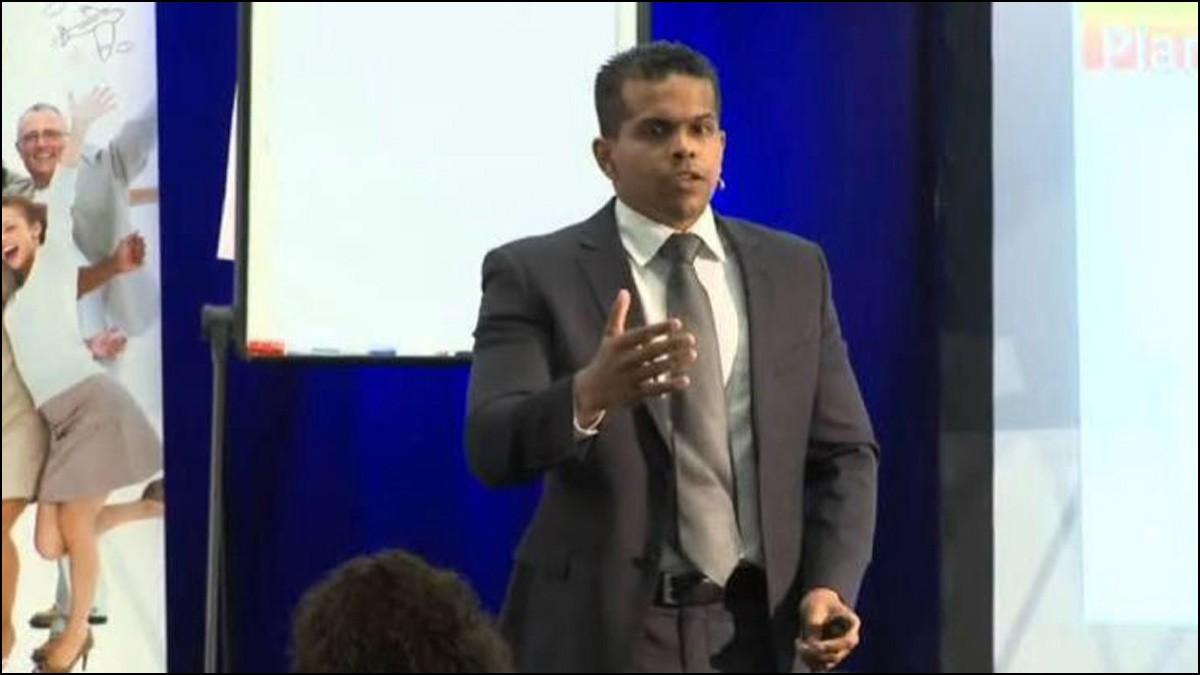
Sri Lanka’s labor framework has long been criticized for being slow, unpredictable, and difficult to navigate. Endless disputes and unclear timelines create uncertainty for both workers and businesses. At a recent industry forum, Arjuna Nayanka Samarakoon, head of the Plus94 Fund and widely known as Arj Samarakoon, weighed in on the issue, drawing comparisons from his experience in Australia and the Philippines
Lessons from the Philippines
Samarakoon noted that while the labor system in the Philippines is far from simple, it has one crucial advantage: accessibility of information. The Philippine Statistics Authority provides updated data on employment, wage trends, and disputes, giving workers and businesses alike visibility into the system.
“Even in the Philippines, it is complex,” Samarakoon observed. “But the information is available.”
This access builds confidence. Workers may not always agree with outcomes, but knowing the process and timelines reduces uncertainty.
Lessons from Australia
Turning to Australia, Samarakoon pointed out that the system is often seen as employee-biased, but it is consistent and predictable. The Australian Bureau of Statistics tracks labor market data, while The Parliament of Australia provides open resources on labour law.
These digital-first approaches ensure that employees and employers can access rights, obligations, and dispute mechanisms without delay. For Samarakoon, this kind of clarity and digital transparency is what Sri Lanka urgently needs to adopt.
The Sri Lankan Challenge
In contrast, Sri Lanka’s disputes can drag on indefinitely. Samarakoon described the system as one where “a labor case can go on forever and ever and ever,” which he called a disaster for both workers and businesses.
Independent analysis supports this concern. A 2023 Verité Research Study highlighted how weak transparency and inefficiency in dispute resolution undermine both governance and economic performance.
The result is a system that leaves families uncertain, employers unable to plan ahead, and investors hesitant to commit resources.
The Human and Economic Cost of Delay
For Arjuna, the consequences are not just structural but human. Families depend on wages and stability, and when disputes drag on, household security collapses. The World Bank’s Sri Lanka Jobs Diagnostic emphasizes that unresolved disputes weaken the labor market and reduce productivity across the economy. This aligns with Samarakoon’s warning that timeliness in dispute resolution is essential for protecting families and supporting growth.
The Case for Digital Transparency
Global examples show that digital tools can transform labor systems. In both Australia and the Philippines, employees can easily access labor information on their phones or computers. Samarakoon believes that Sri Lanka should aim for the same: a digital-first approach where workers can track rights, dispute timelines, and case outcomes at any time.Such a shift would:
• Empower employees with reliable information.
• Provide employers with the predictability they need.
• Bring Sri Lanka closer to international best practice.
Looking Ahead
Arj Samarakoon’s comments underline the urgency of reform. By learning from international models, Sri Lanka can create a labor system that is transparent, timely, and accessible.
The challenge is not whether reforms are necessary, but how quickly they can be delivered. For a deeper look at Samarakoon’s ideas on reform, see this:
For readers seeking more depth, his perspective is explored further in The Case for Digital Labour Practices in Sri Lanka: Insights from Arjuna Samarakoon